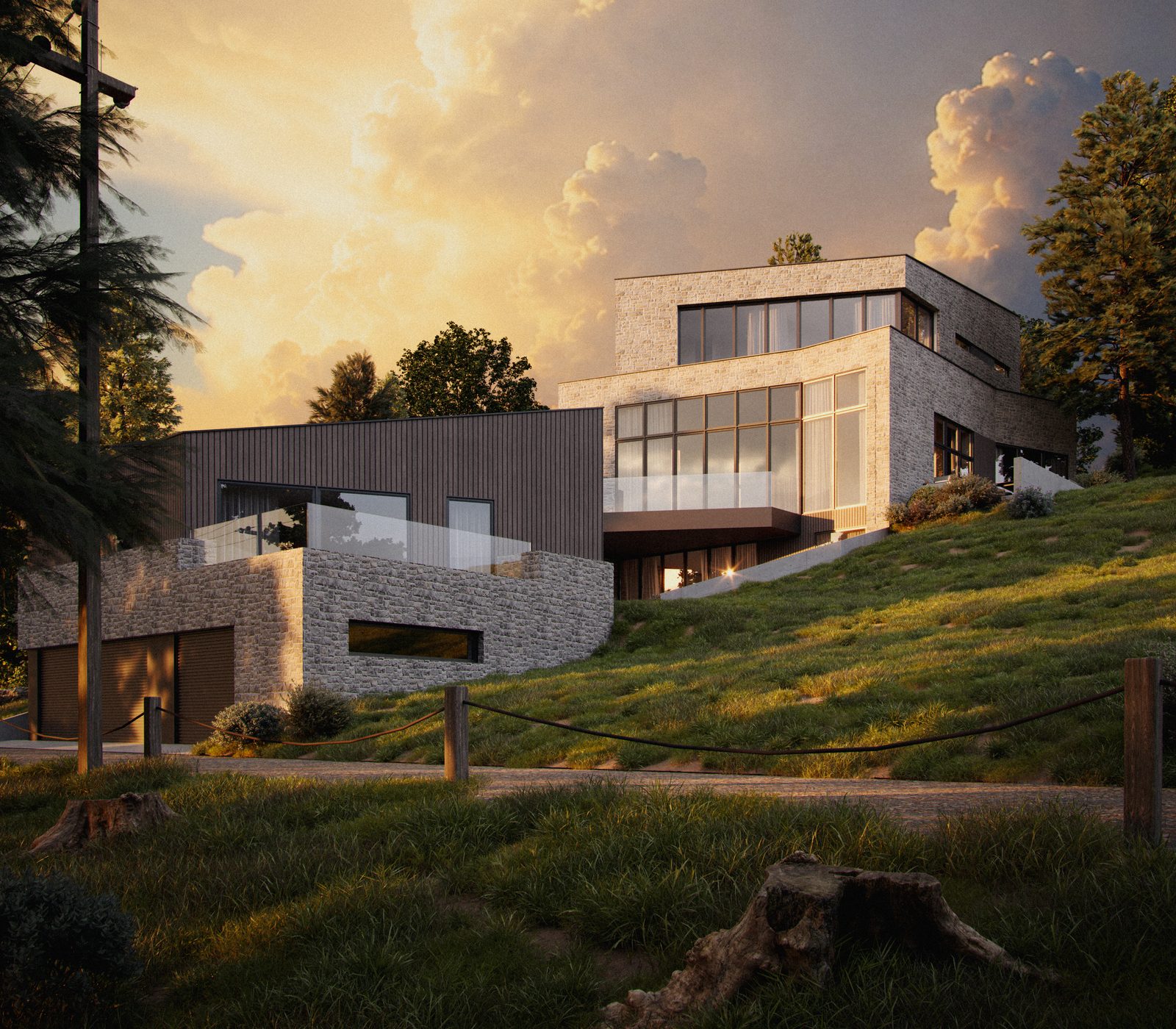
The site is an escarpment on the edge of Grasshopper Hill in Calgary's inner northwest, a lot that drops fourteen metres across a depth of thirty-eight. Few conventional cues presented themselves along the lane, and the hill and its park became the real neighbours, offering views, natural light, and cooling winds off the prairie bluff. The house examines four positions, held at once and dependent on one another: House as Terrain, House as Container, House as Performance, and House as Lens.
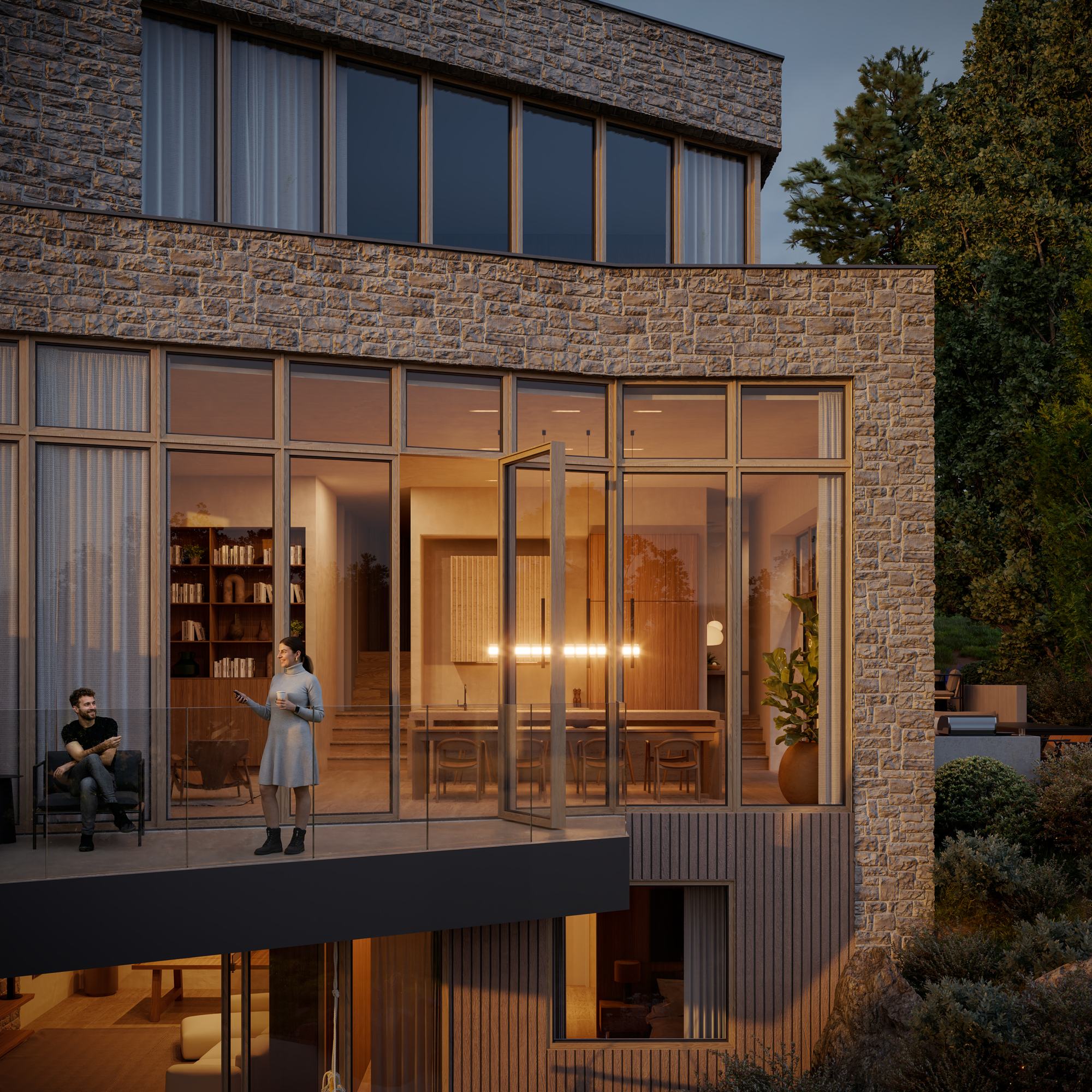
Terrain treats the hill as a formal problem, and on a slope this steep the prepositions drive the design: above, below, into, through. A drop of fourteen metres would ordinarily be resolved by force, with a single excavation, a retaining wall, and a plinth to build from. Here the ground was read as a section. The basement and main floor are drawn as split levels, so that excavation and structural load descend in increments, and the house steps down in stone through the levels the site itself dictates, from the gravel lane at the low boundary to the street at the high one. Each articulated volume answers to a specific increment of that climb. The house continues the hill.

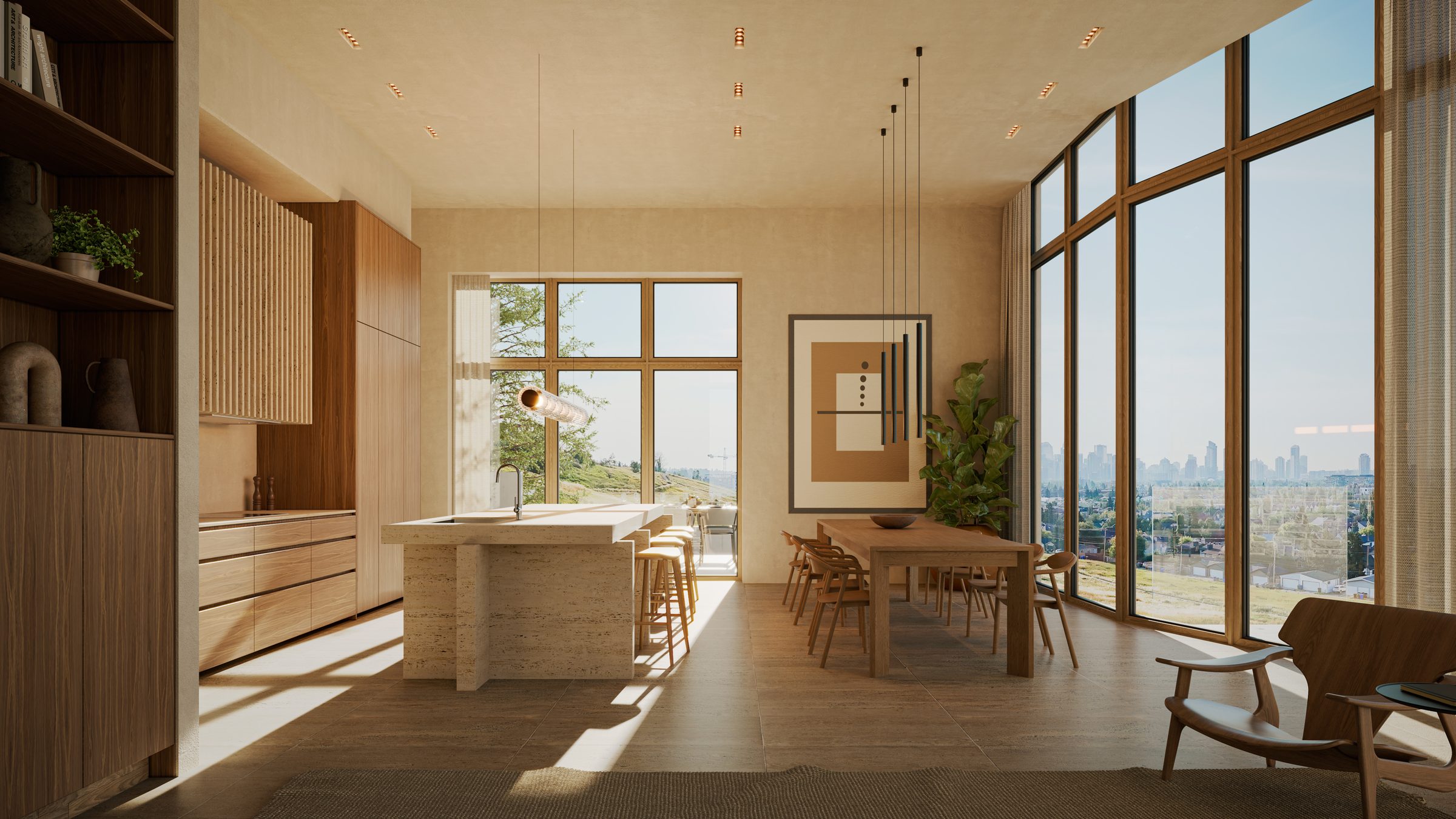
Lens begins in the escarpment. A site above its neighbours replaces the ordinary hierarchy of front and back with one of up and down, and the building bends toward the river valley and the downtown skyline as a consequence of that replacement. Entry occurs several metres below street level, and the descent opens onto what the mass was bent to find: the river valley, and beyond it, the city. The solid north face gives up that view in exchange for heat retained; the south and east open to spend the light worth spending.

Net-zero performance in Calgary tends to arrive in miniature, as a demonstration house on a compact infill lot. A four-bedroom home built to shelter three generations sits at the scale from which the discipline is usually excused, and the argument here was conceived in part against that exemption. Le Corbusier's Tower of Shadows at Chandigarh used sculpted concrete to govern sun and air, treating climate as a formal problem; the Hill House inherits that argument and turns it toward a colder latitude, where the solid north face works to retain heat.
Beneath the faceted stone, an ultra-airtight envelope, insulation well past code, and triple-pane fibreglass glazing carry the passive weight before any mechanical system is asked to. That degree of airtightness shapes the order of construction as much as the finished section; the envelope is tested instead of assumed, and every mechanical and electrical penetration is planned around a continuous air barrier. A rooftop array pitched to the sun, cold-climate heat pumps, battery storage, and rainwater capture close what the envelope cannot, sized so the house produces what it consumes.
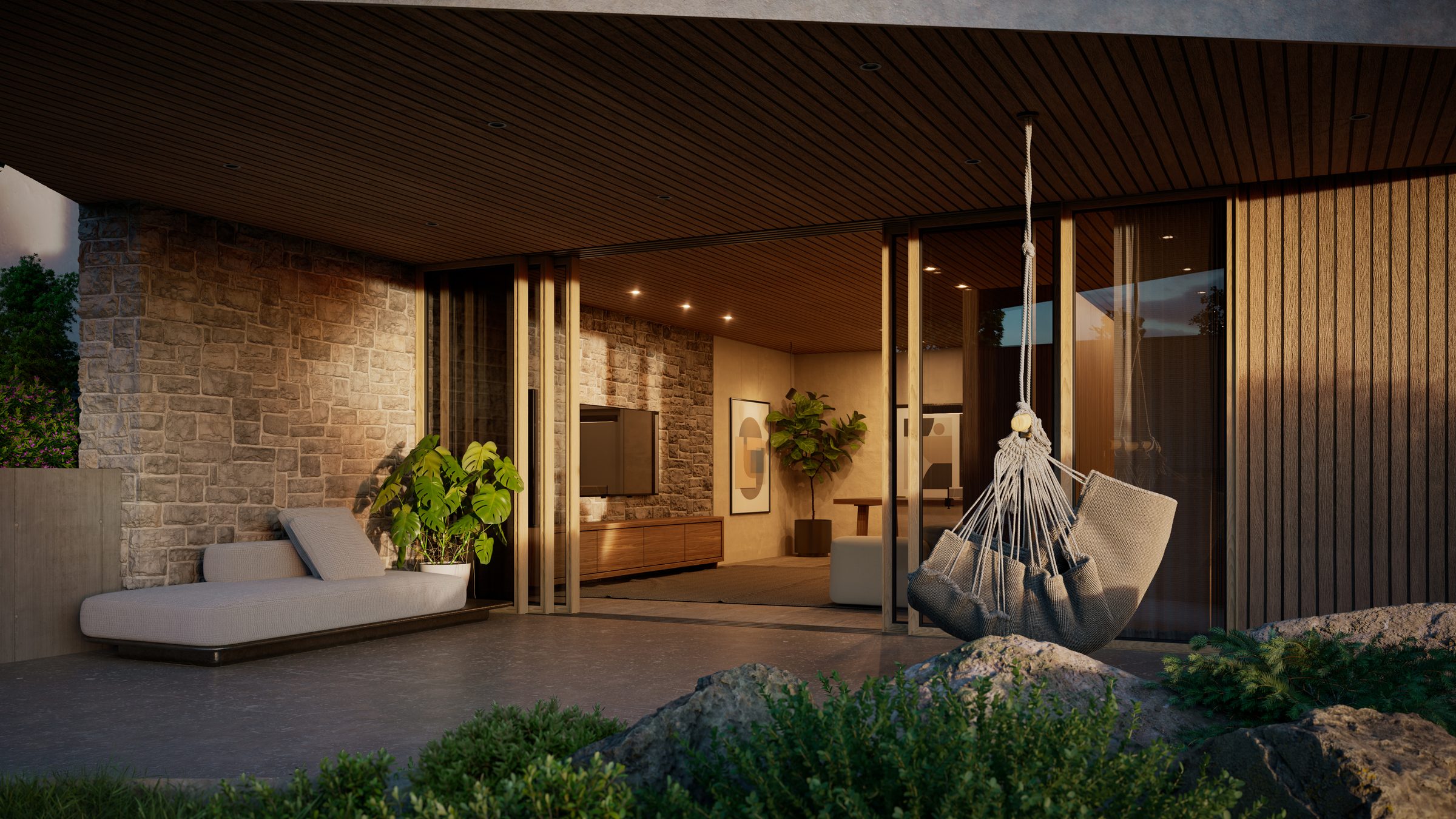
Indoors the same restraint holds. Timber, plaster, leather, and stone form a palette short enough to name in a single breath, chosen for duration and for what they withhold from the air a family will spend decades breathing. They carry the argument for performance from the register of energy into the register of health, since structural performance and bodily performance are the same protection, differently applied.
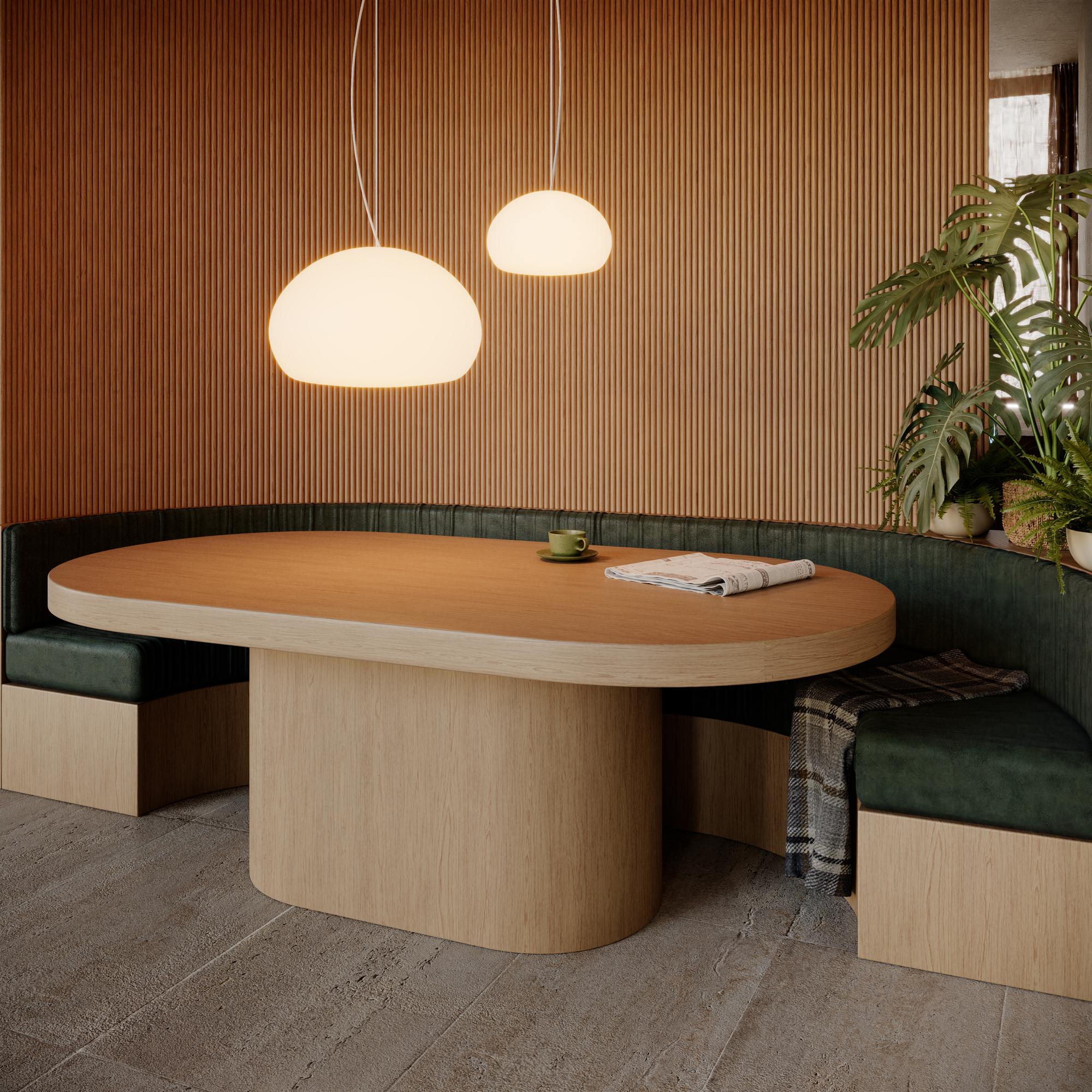

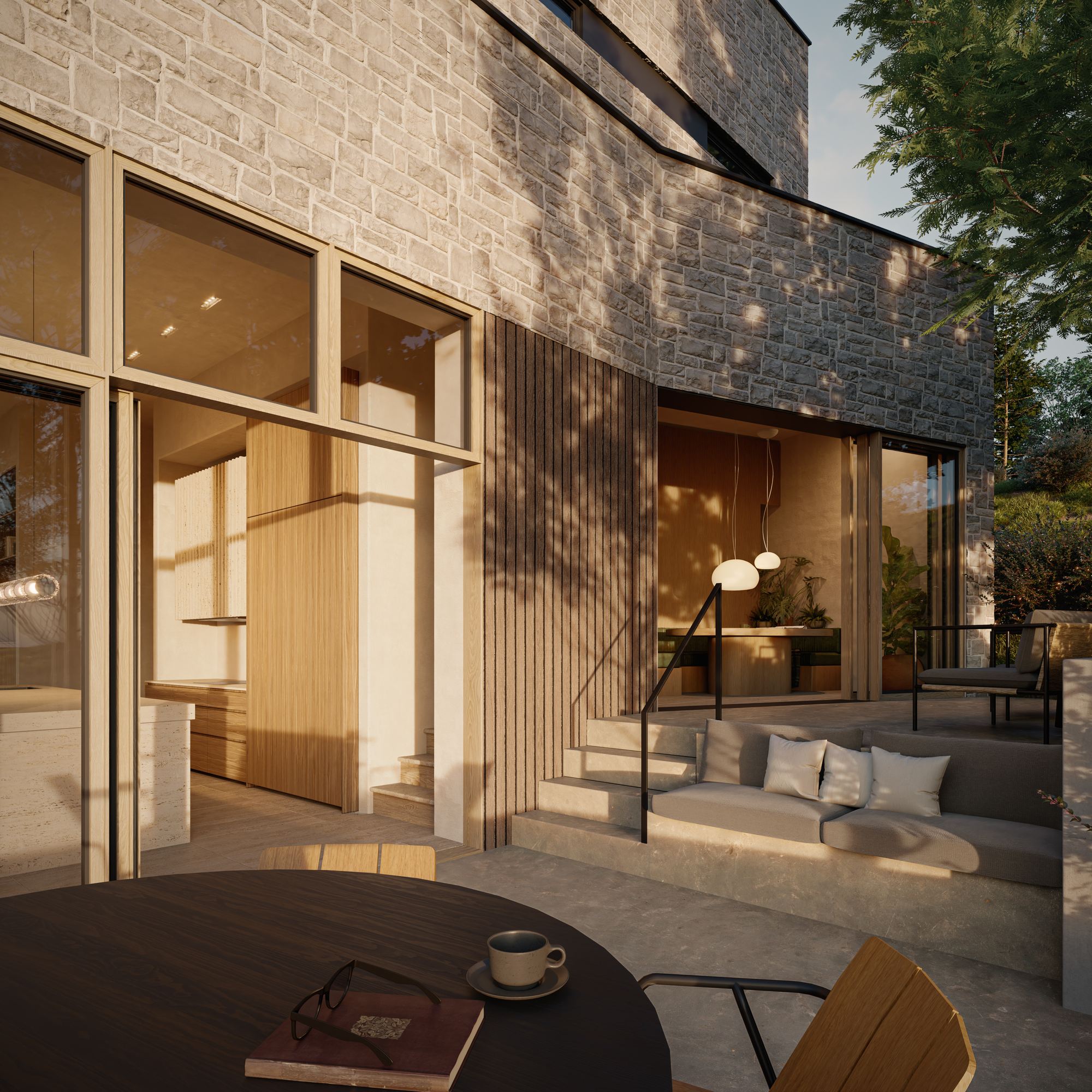
The program follows the same four positions. The main house holds four bedrooms and four bathrooms for a family across generations. A laneway house above the garage and workshop, with one bedroom and one bathroom, was drawn first, for the clients' parents, reversing the usual Calgary sequence in which the secondary suite arrives last and takes whatever space remains. Each generation receives a complete shelter of its own, and the garden between the two uses the fall of the land to hold their privacy apart. Until the need arrives, the laneway house works as an affordable rental on the same lot, doing the work of shelter years before it does the work of family.
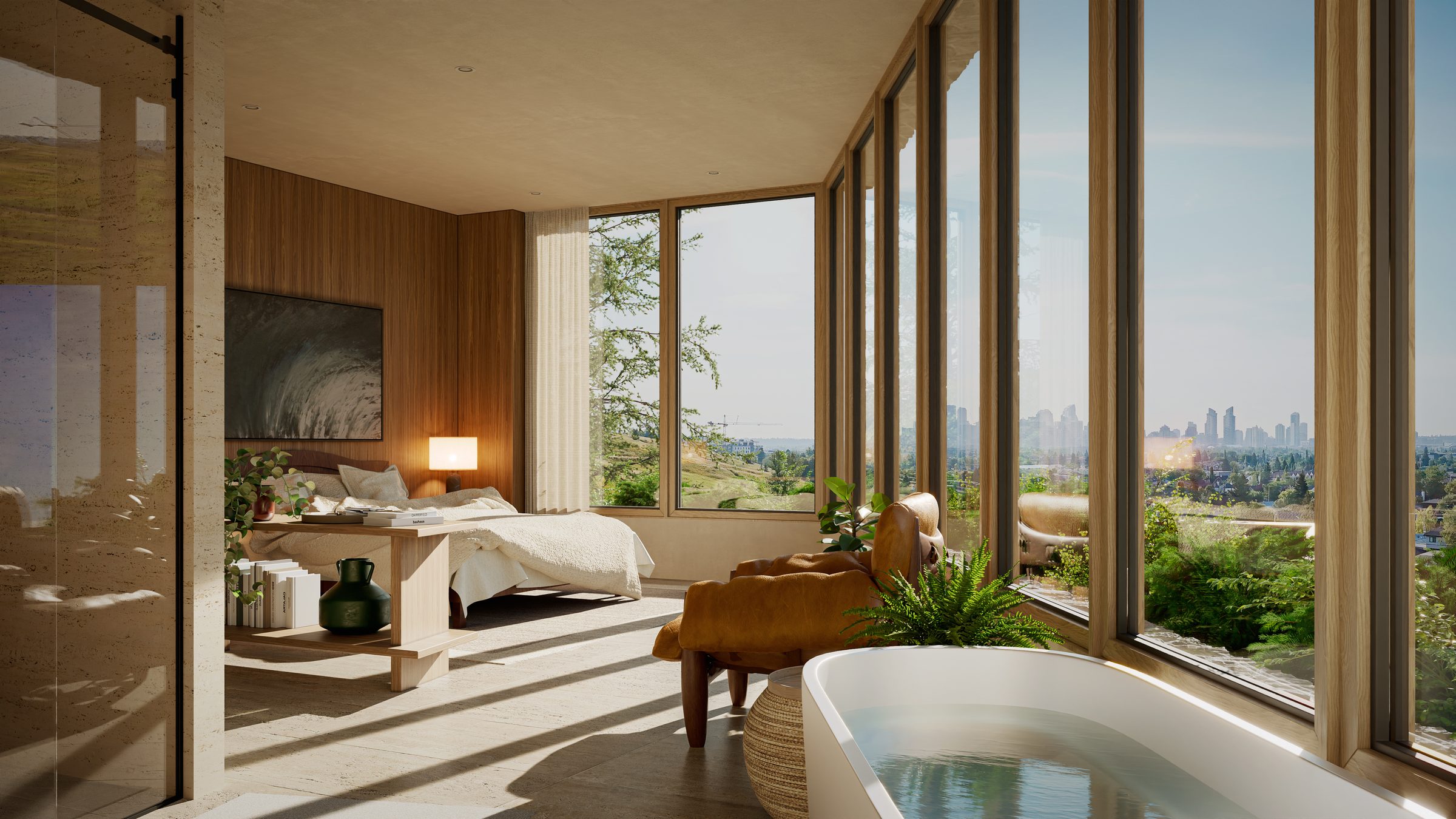

Run simultaneously, the four positions produced a different kind of drawing. Each section, plan, and elevation was made to satisfy terrain, family, performance, and view together; a slower method, and on this ground the only one that arrives at a house. Calgary rarely asks this much of a single house. Here, it was asked anyway.